
This spaghetti with tomato and basil isn’t about perfection. It’s about the little flaws that make it real—an uneven chop of basil, a slightly overripe tomato, a splash more olive oil. I love how these tiny imperfections bring a dish to life, giving it character and a sense of honest, hands-on cooking.
Making this with my kids once reminded me that the best meals often come from just throwing things together without fuss. No need for pristine ingredients or precise techniques—just ripened tomatoes, fresh basil, and a bit of patience as everything simmers and melds. It’s humble, messy, and beautifully imperfect.
This dish feels like a snapshot of summer, even in winter. It’s simple, straightforward, and full of stories—each bite a reminder that good food doesn’t need to be polished to be memorable.
Focusing on the imperfect, homemade charm of a simple dish that’s often rushed or polished, I want to highlight how the slight variations in ripeness, the uneven chop of basil, and the imperfect simmering process actually add character and soul to spaghetti with tomato and basil. It’s a reminder that beauty in cooking often lies in the mess and the small, honest flaws.
Celebrating Imperfection in Simplicity
- This dish reminds me of lazy summer afternoons in Italy, where simplicity shines and every bite feels like a small celebration.
- Cooking this when I’m hurried makes me appreciate how imperfect the process can be—sometimes the best moments are unplanned and messy.
- There’s an unspoken joy in tossing basil leaves right into the sauce, watching their vibrant green burst and scent fill the kitchen.
- I’ve realized that the charm of this dish lies in its small flaws—an uneven chop, a splash of extra oil—that make it feel honest and heartfelt.
- Sharing this with friends always sparks conversations about childhood memories and favorite family recipes, making it more than just a meal.
The story behind this recipe
- This dish took me back to my grandmother’s kitchen, where simplicity was king, and basil was plucked fresh from the garden. I remember the way she would crush garlic with her fingers, releasing that pungent, sweet aroma that filled the air before mixing it into ripe tomatoes simmered just enough to soften without losing their bright flavor. It’s a humble recipe, but one that’s always felt like a little act of love, made with whatever was at hand but always with care.
- One summer, I was rushing through a busy week, grabbing a handful of basil from my tiny balcony garden, and I decided to toss it into a quick sauce. The smell alone brought a rush of nostalgia—fresh, green, and slightly peppery. That moment made me realize how a simple dish can carry so much history and personality, even in its most unpolished form.
- heading: ‘The story behind this recipe’
Contextual origin, trivia, or history
- This dish harks back to Italy’s rustic roots, where simple ingredients like tomatoes, basil, and pasta were everyday staples.
- Tomato and basil combinations became popular in Italian cuisine in the 19th century, thanks to the growing influence of Neapolitan cooking.
- The use of fresh basil in tomato sauces was once considered a sign of quality, often reserved for special family meals or festivals.
Ingredient breakdown: key components
- San Marzano tomatoes: I love their sweet, rich flavor with a hint of earthiness—look for ripe, plump ones for the best sauce, or use good quality canned if fresh aren’t in season.
- Fresh basil: The aroma of bright green basil leaves smashes through the sauce—don’t skimp, but tear them rather than chop to release their oils more fully.
- Good olive oil: I prefer a fruity, peppery extra virgin—drizzle at the end for a fresh, lively punch, or use a milder one if you want a subtler finish.
- Garlic: I crush and gently sauté until fragrant, just starting to turn golden—overcooking turns it bitter, so keep an eye on the color and smell.
- Spaghetti: I choose a hearty, slightly thicker strand—al dente, of course—so it holds up to the sauce without losing its bite in the pot.
- Salt & pepper: I season in layers—salting the water generously, then adjusting the seasoning of the sauce last—taste and tweak until it sings with brightness.
- Optional chili flakes: I toss in a pinch if I want a subtle heat, but be careful, it can easily overpower the fresh flavors—start small and adjust.
Spotlight on key ingredients
San Marzano tomatoes:
- I love their sweet, rich flavor with a hint of earthiness—look for ripe, plump ones for the best sauce, or use good quality canned if fresh aren’t in season.
- Fresh basil: The aroma of bright green basil leaves smashes through the sauce—don’t skimp, but tear them rather than chop to release their oils more fully.
Fresh basil:
- The aroma of bright green basil leaves smashes through the sauce—don’t skimp, but tear them rather than chop to release their oils more fully.
- Good olive oil: I prefer a fruity, peppery extra virgin—drizzle at the end for a fresh, lively punch, or use a milder one if you want a subtler finish.
Notes for ingredient swaps
- Fresh Tomatoes: Use canned crushed or pureed tomatoes if ripe, juicy ones aren’t available—saves the prep time but can slightly alter the fresh flavor.
- Basil: Oregano or thyme can add a different herbal note; basil offers that sweet, peppery brightness essential to this dish.
- Olive Oil: Avocado oil or light vegetable oil can be used in a pinch—milder flavor, less fragrant but still good for sautéing.
- Garlic: Garlic powder or roasted garlic cloves—less pungent, more mellow, but try to include some garlic for that punch.
- Pasta: Gluten-free spaghetti or zucchini noodles—great for dietary needs, but they can cook faster and may have a different texture.
- Salt & Pepper: Sea salt or pink Himalayan salt—just adjust the quantity slightly, as these can be more or less salty than regular table salt.
- Chili Flakes: Paprika or a dash of cayenne—adds warmth or smoky depth if you want a little kick without the heat of chili flakes.
Equipment & Tools
- Large saucepan: Boil pasta efficiently in plenty of salted water.
- Colander: Drain pasta without excess water.
- Heavy skillet: Cook and simmer the tomato sauce evenly.
- Wooden spoon: Stir ingredients and scrape up bits from pan.
- Sharp knife: Chop tomatoes, basil, and garlic precisely.
- Measuring spoons: Control oil, salt, and seasoning.
Step-by-step guide to spaghetti with tomato and basil
- Equipment & Tools: Large saucepan for boiling pasta, colander for draining, heavy skillet or frying pan for sauce, wooden spoon for stirring, sharp knife, cutting board, measuring spoons, tongs.
- Bring a large pot of water to a rolling boil—about 100°C (212°F). Salt generously—like the sea, don’t hold back. Drop in spaghetti and cook until just al dente, about 8 minutes. Stir occasionally. Check a strand—should be firm but not hard.
- While pasta cooks, heat 2 tbsp olive oil in your skillet over medium heat—about 160°C (320°F). Add 2 crushed garlic cloves; cook until fragrant, about 30 seconds—smell that sweet, pungent aroma. If it turns bitter or brown, turn down the heat immediately.
- Add 4 ripe, chopped San Marzano tomatoes or canned equivalent. Simmer gently—about 10 minutes—until the sauce thickens slightly and the tomatoes break down, releasing a bright, slightly sweet scent. Stir occasionally, scraping up any bits stuck to the pan.
- Tear or chop a handful of fresh basil—about 15 leaves—then toss into the sauce. Cook for another minute until fragrant and vibrant green. If sauce tastes flat, season with salt and a pinch of pepper. If too thick, splash in a little pasta water to loosen.
- Drain the pasta, reserving a cup of starchy cooking water. Add pasta directly to the sauce. Toss well—about 30 seconds—so each strand is coated and shiny. If the mixture feels dry, add a splash of reserved pasta water.
- Remove from heat, drizzle with a little extra virgin olive oil—about 1 tsp—for a fresh finish. Toss in more basil if desired, then taste and adjust seasoning. Serve immediately, with a sprinkle of flaky sea salt if you like.
- Resting & Finishing: Plate the pasta in warm bowls, garnish with a few basil leaves. Let it sit for a minute—just enough to settle. Serve with a final drizzle of olive oil and a crack of black pepper. Enjoy the aroma of fresh basil and ripe tomato.
Serve immediately in warm bowls, garnished with basil leaves and a drizzle of olive oil. Let sit for a minute for flavors to settle before enjoying.
How to Know It’s Done
- Pasta is al dente—firm to the bite, not mushy.
- Tomato sauce is vibrant, slightly thickened, with fragrant basil aroma.
- Pasta is coated evenly, glossy, with a splash of pasta water if needed.
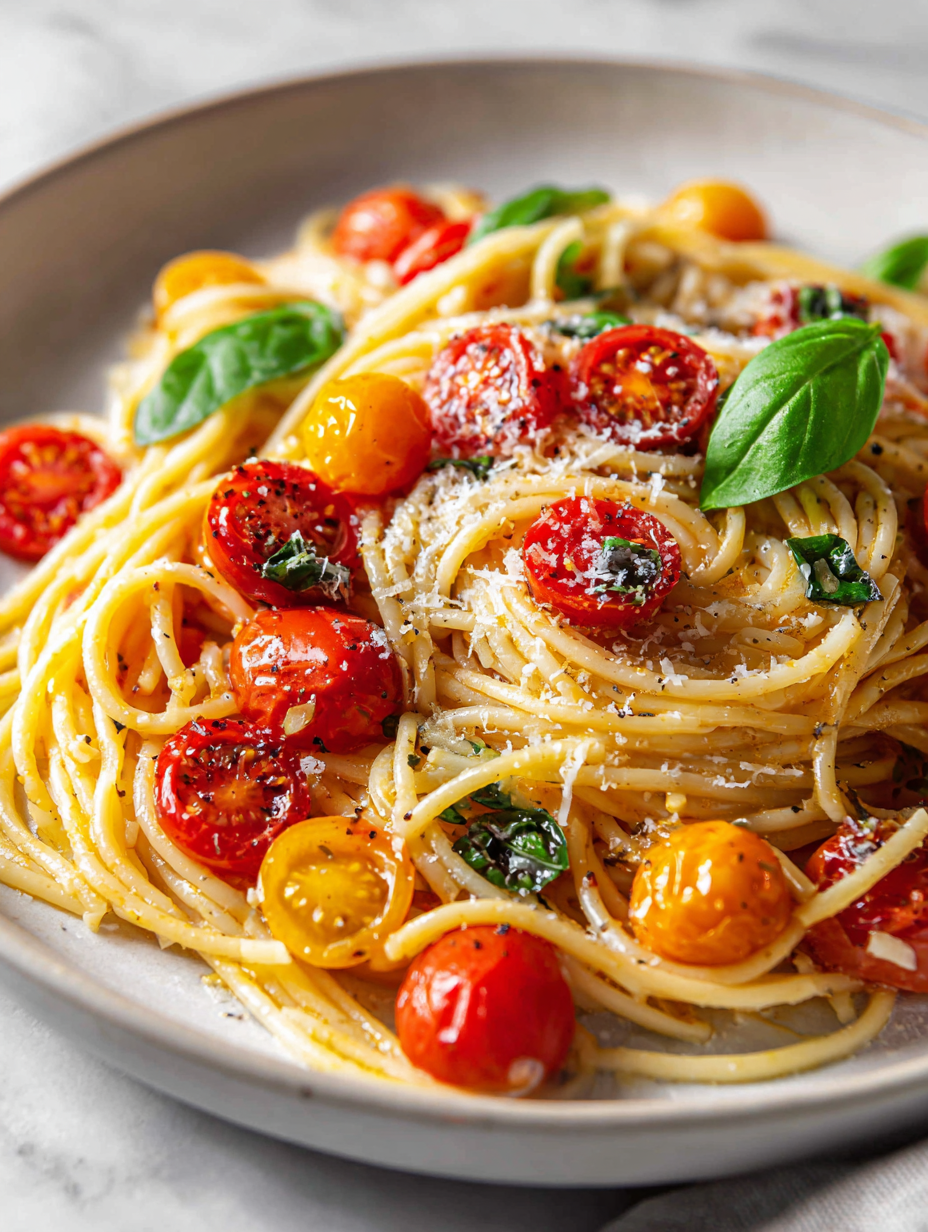
Imperfect Summer Spaghetti with Tomato and Basil
Ingredients
Equipment
Method
- Bring a large pot of salted water to a rolling boil. Once bubbling, add the spaghetti and cook until just al dente, about 8 minutes, stirring occasionally. Drain and set aside, reserving a splash of pasta water.
- While the pasta cooks, heat 2 tablespoons of olive oil in a heavy skillet over medium heat. Add the crushed garlic and sauté gently, just until fragrant and slightly golden, about 30 seconds. Keep a close eye to prevent burning.
- Add chopped ripe tomatoes to the skillet. Let them simmer gently, breaking down slightly, for about 10 minutes until the sauce becomes fragrant and slightly thickened. Stir occasionally, scraping up any bits stuck to the pan.
- Tear the basil leaves and add them to the sauce. Cook for another minute until the basil releases its aroma and turns vibrant green. Season with salt and freshly ground black pepper, tasting and adjusting as needed. If the sauce thickens too much, add a splash of reserved pasta water to loosen it.
- Transfer the drained pasta into the skillet with the sauce. Toss everything together gently using a wooden spoon, ensuring each strand is coated with the fragrant tomato and basil mixture. Add more pasta water if the sauce feels too thick or sticky.
- Remove the skillet from heat. Drizzle with a little extra virgin olive oil for a fresh, glossy finish, and add more torn basil if desired. Give everything a final toss to combine the flavors.
- Divide the spaghetti among warm plates. Garnish with additional basil leaves and a crack of black pepper. Serve immediately for the best aroma and flavor—enjoy the imperfect charm of this rustic dish.
Notes
Pro tips for perfect spaghetti
- Bold Flavors: Use a splash of pasta water to loosen the sauce—it helps it cling and enhances flavor.
- Gentle Simmer: Keep the sauce at a gentle simmer to avoid breaking down the tomatoes and losing brightness.
- Timing Matters: Add basil at the end to preserve its vibrant aroma and avoid cooking out its freshness.
- Oil Finish: Drizzle a little good olive oil after cooking for an extra layer of rich, fruity aroma.
- Taste as You Go: Always taste before serving—adjust salt, pepper, and acidity for perfect balance.
- Avoid Overcooking Pasta: Rinse briefly with hot water after draining to stop cooking and keep it al dente.
- Prep in Advance: Chop tomatoes and basil earlier; it saves time and keeps everything fresh for assembly.
Common mistakes and how to fix them
- FORGOT to taste and adjust seasoning—always taste for bright, balanced flavors before serving.
- DUMPED pasta into cold water—always use hot water and salt generously for proper cooking.
- OVER-TORCHED garlic—sauté gently until fragrant, not browned or bitter.
- SKIPPED saving pasta water—reserve for adjusting sauce consistency and emulsification.
Quick fixes and pantry swaps
- If sauce is too thick, splash in hot pasta water to loosen it.
- When basil turns black, add it later or turn down heat to preserve color.
- Splash extra olive oil if sauce feels flat or dull—brightens flavor instantly.
- Patch over over-salted sauce with a splash of water or more tomatoes.
- Shield garlic from burning by lowering heat once fragrant, keep it golden, not bitter.
Prep, store, and reheat tips
- Chop tomatoes and tear basil leaves a few hours ahead; store separately in airtight containers in the fridge. Flavors intensify and stay fresh for up to 4 hours.
- Cook the pasta until just al dente, then drain and toss with a teaspoon of olive oil. Store in a sealed container for up to 2 days; reheat briefly in boiling water or microwave, expect a slightly softer texture.
- Prepare the tomato sauce in advance and keep refrigerated for up to 1 day. Reheat gently on the stove, stirring often, until steaming and fragrant—watch for overcooking to preserve brightness.
- Reheat leftovers by tossing with a splash of pasta water or olive oil to loosen the sauce. The aroma of basil and fresh tomato should revive quickly, about 1-2 minutes on medium heat.
- For longer storage, freeze cooled sauce in airtight containers for up to 2 months. Thaw overnight in the fridge and reheat gently, watching for any separation or loss of vibrant flavor.
Top questions about spaghetti with tomato and basil
1. How do I choose the best tomatoes and basil?
Use ripe, fragrant tomatoes like heirlooms or cherry tomatoes for a sweeter, more vivid flavor. Fresh basil should be bright green and aromatic. These ingredients are key to that punchy, garden-fresh taste.
2. How do I get perfect al dente pasta?
Cook the pasta until just al dente—firm but not hard—about 8 minutes in boiling salted water. Overcooking makes it mushy, while undercooking leaves it tough.
3. When should I add basil for the best flavor?
Tear basil leaves instead of chopping to release their essential oils. Add basil at the very end of cooking to keep its fresh aroma and vibrant color.
4. Why save pasta water and how do I use it?
Reserve some pasta water before draining. Use it to loosen the sauce if it’s too thick—starchy water helps everything cling and adds flavor.
5. How do I avoid burning garlic?
Avoid over-sautéing garlic; cook it gently until fragrant, about 30 seconds, to prevent bitterness. It should smell sweet and pungent, not burnt.
6. How do I season the sauce correctly?
Season your sauce with salt and pepper gradually—taste often. The brightness of fresh herbs and acidity can be balanced this way.
7. What’s the best way to finish this dish?
Finish with a drizzle of good olive oil and a few fresh basil leaves. It adds a fruity richness and a fresh aroma right before serving.
8. Can I make this ahead and how do I store it?
This dish is best enjoyed immediately, but leftovers can be stored in the fridge for up to 2 days. Reheat gently on the stove, stirring often, to keep the sauce bright.
9. Can I substitute ingredients if I don’t have fresh ones?
Substitutions like canned tomatoes for fresh, or basil for oregano, can change the flavor but still yield a tasty dish. Use what you have, adjusting cooking time if needed.
10. What if my sauce tastes dull or flat?
If your sauce turns out flat, splash in a bit more olive oil or add a pinch of sugar to balance acidity. For a quick fix, a small squeeze of lemon can brighten flavors.
This simple dish is a reminder that the best flavors often come from honest, imperfect ingredients and a bit of patience. It’s about appreciating the bright pop of basil and the sweet acidity of tomatoes, even if they’re not perfectly uniform.
In a world obsessed with perfection, this spaghetti keeps it real—messy, vibrant, and full of small, honest flaws that make each plate unique and memorable. Sometimes, the most unpolished meals turn out to be the most satisfying.

Hi, I’m Mia Bennett, the chef and storyteller behind Grounding in Tradition. I’m so glad you’re here. This blog is my way of preserving the flavors, techniques, and rituals that shaped me as both a cook and a professional chef. Grounding in Tradition is not about trends or shortcuts. It is about honoring where food comes from, understanding the hands that prepare it, and carrying forward recipes that deserve to be remembered.





Leave a Reply