
This recipe is inspired by my grandmother’s Sunday dinners, where she used inexpensive lamb shanks to create a dish that felt luxurious yet homely. The slow braise with red wine was her secret to tender, falling-off-the-bone meat, infused with memories of family laughter and the smell of garlic and herbs filling the kitchen.
Cooking this dish feels like a quiet act of care, a ritual that transforms humble ingredients into something special. The aroma of wine and herbs as it simmers is a reminder of slow, deliberate cooking—a moment to pause and savor the process as much as the final plate.
There’s something deeply satisfying about pulling apart those tender shanks, the meat melting into a rich, wine-infused sauce. It’s a dish that invites not just eating, but sharing—whether for a cozy weekend or a small family gathering, it always feels like a small celebration.
This recipe is inspired by my grandmother’s Sunday dinners, where she used inexpensive lamb shanks to create a dish that felt luxurious yet homely. The slow braise with red wine was her secret to tender, falling-off-the-bone meat, infused with memories of family laughter and the smell of garlic and herbs filling the kitchen.
Reviving a Sunday Classic
- Cooking this dish always takes me back to my grandmother’s kitchen, where the smell of wine and thyme filled the air and made everything feel right.
- There’s a quiet pride in slowly braising those shanks until they’re fall-apart tender—like you’re giving the meat a long, warm hug.
- I love how the rich, slightly smoky wine sauce makes even the simplest sides feel like a special occasion, no matter the day.
- Sometimes I get impatient waiting for the sauce to reduce, but then I realize it’s the best part—almost syrupy and intensely flavored.
- Sharing this meal feels like passing down a secret, a little piece of family history wrapped in a deep, savory sauce.
Reviving a Sunday Classic
This dish came about after a long week when I needed something hearty but with a touch of elegance. I remembered how my grandmother would braise lamb shanks slowly, filling her kitchen with the rich scent of red wine and herbs. It’s a simple recipe, but the magic is in letting those flavors meld over time, turning humble ingredients into something special. Every time I make it, I feel like I’m reconnecting with those Sunday dinners of my childhood—comforting, unpretentious, and deeply satisfying.
Historical and Cultural Notes
- Lamb shanks have been a staple in Mediterranean and Middle Eastern cuisines for centuries, valued for their rich flavor and economical cut.
- The slow braise with red wine became popular in French cooking, especially in regions where hearty, wine-infused stews are traditional.
- Historically, braising tough cuts like shanks was a way to turn inexpensive meat into a luxurious-feeling dish, celebrating patience and time in cooking.
- Red wine reduction sauces originated as a method to intensify the flavor and preserve the wine’s character during long cooking sessions.
- In some cultures, lamb shanks symbolize celebration and family gatherings, often served during festive occasions with communal joy.
Component Roles and Tips
- Lamb shanks: I love the rich, meaty aroma they develop as they braise—look for ones with plenty of marrow, it adds so much flavor. Swap for beef if you want a different but still hearty experience.
- Red wine: I prefer a dry, full-bodied wine like Cabernet or Merlot—gives a deep, fruity backbone. If you only have cooking wine, it’s okay, but avoid overly sweet varieties which can muddle the sauce.
- Garlic: Fresh garlic is a must—its pungent aroma mellows beautifully during cooking, lending a warm, slightly spicy note. Dried garlic powder can work in a pinch but won’t give the same punch.
- Onions: I use yellow onions for sweetness and depth—when they soften and turn golden, the kitchen smells like comfort. For a milder sweetness, swap in shallots or leeks.
- Herbs: A sprig of thyme and a bay leaf—these add a fragrant, earthy layer that balances the richness. Fresh herbs are preferable, but dried can do if you’re in a rush; just use less.
- Olive oil: I use good-quality extra virgin—it’s the base for searing and browning. If you want a lighter dish, a neutral oil like grapeseed works, but you’ll lose some of that fruity aroma.
- Carrots: Optional but recommended—they add a subtle sweetness and color contrast. Slice them thick enough so they don’t disintegrate during braising, or skip if you prefer a simpler sauce.
Spotlight on key ingredients
Lamb shanks:
- I love how they develop a deep, meaty aroma as they braise—look for ones with plenty of marrow for maximum flavor. Swap with beef shanks if you want a different but equally hearty experience.
- Red wine: I prefer a full-bodied, dry variety like Cabernet or Merlot—its fruity undertones and tannic structure give the sauce richness. If using cooking wine, avoid overly sweet options—they can spoil the depth.
Garlic:
- Red wine: Its dark, fruity aroma turns inviting as it reduces—look for a bottle with a good balance of tannin and acidity. Skip if you prefer a milder sauce, but avoid cheap or overly sweet wine that can muddy the flavor.
- Fresh garlic releases a pungent, spicy aroma that mellows into a warm, aromatic note during cooking—crucial for that deep savory base. Dried garlic powder can work, but it won’t give the same vibrancy.
Notes for ingredient swaps
- Lamb shanks: Swap for beef shanks if you prefer a milder, leaner flavor, but expect slightly less richness and a different texture.
- Red wine: Use a dry Marsala or sherry for a slightly sweeter, nuttier note if you don’t have red wine on hand; it will alter the depth of the sauce.
- Garlic: Dried garlic powder can replace fresh if you’re in a pinch, but it won’t develop the same pungent aroma or depth during braising.
- Onions: Shallots or leeks make a sweeter, more delicate alternative; they soften beautifully and lend a different aroma to the base sauce.
- Herbs: Fresh thyme and bay leaf are ideal, but dried herbs work well—just use about half the amount and crush dried herbs before adding.
- Olive oil: Grape seed or canola oil can substitute for a lighter, neutral flavor, though you’ll lose some fruity aroma from extra virgin olive oil.
- Carrots: Parsnips or celery can add subtle sweetness or depth; skip if you want a more straightforward, meat-focused dish.
Equipment & Tools
- Dutch oven or deep braising pan: To sear and braise the lamb evenly in a single vessel.
- Tongs: For turning and handling the hot shanks during searing.
- Wooden spoon: To scrape flavorful bits and stir the sauce without damaging non-stick surfaces.
- Sharp knife: To prepare vegetables and portion the lamb shanks.
- Measuring cups and spoons: To accurately measure wine, broth, and seasonings.
Step-by-step to tender lamb shanks
- Equipment ready: heavy Dutch oven or deep braising pan, tongs, wooden spoon, sharp knife, cutting board, and measuring cups. Preheat your oven to 160°C (320°F).
- Pat the lamb shanks dry with paper towels—this helps sear them nicely. Season generously with salt and pepper.
- Heat a splash of olive oil in the pan over medium-high heat. Sear the shanks in batches, about 4-5 minutes per side, until deeply browned. Remove and set aside.
- In the same pan, add chopped onions and carrots. Cook over medium heat until softened, about 8 minutes, stirring occasionally, until they develop a golden hue and smell sweetly caramelized.
- Pour in a half bottle of red wine (about 250 ml). Scrape up any browned bits from the bottom with a wooden spoon. Bring to a simmer, letting it reduce slightly, about 4-5 minutes, until it smells rich and fruity.
- Add garlic, thyme sprigs, bay leaf, and the seared lamb shanks back into the pan. Pour in enough beef or vegetable broth to cover the meat halfway—about 500 ml.
- Bring the mixture to a gentle simmer on the stovetop, then cover with a lid. Transfer the pan to the oven and braise for 2.5 to 3 hours, or until the meat is fall-off-the-bone tender. Check after 2 hours; the meat should jiggle and be very soft.
- Halfway through, turn the shanks gently to ensure even braising. If the liquid reduces too much, add a splash more broth or wine to keep the meat submerged.
- Once cooked, remove the shanks carefully and set aside to rest briefly. Keep warm, and strain the sauce through a fine sieve into a saucepan. Reduce over medium heat until thickened and glossy, about 10 minutes. Adjust seasoning with salt and pepper.
- Finish with a pat of cold butter or a splash of fresh wine if you like a richer, silkier sauce. Serve the shanks smothered in the sauce, with your favorite sides.
Let the lamb rest for about 5 minutes before serving. Spoon the rich sauce over the meat and sides. Serve with crusty bread or creamy mashed potatoes to soak up every drop.
How to Know It’s Done
- Meat should be very tender and almost falling apart when pierced with a fork.
- The sauce should be deep, glossy, and slightly thickened—coat the back of a spoon.
- The lamb shanks should jiggle gently at the bone, indicating perfect doneness.
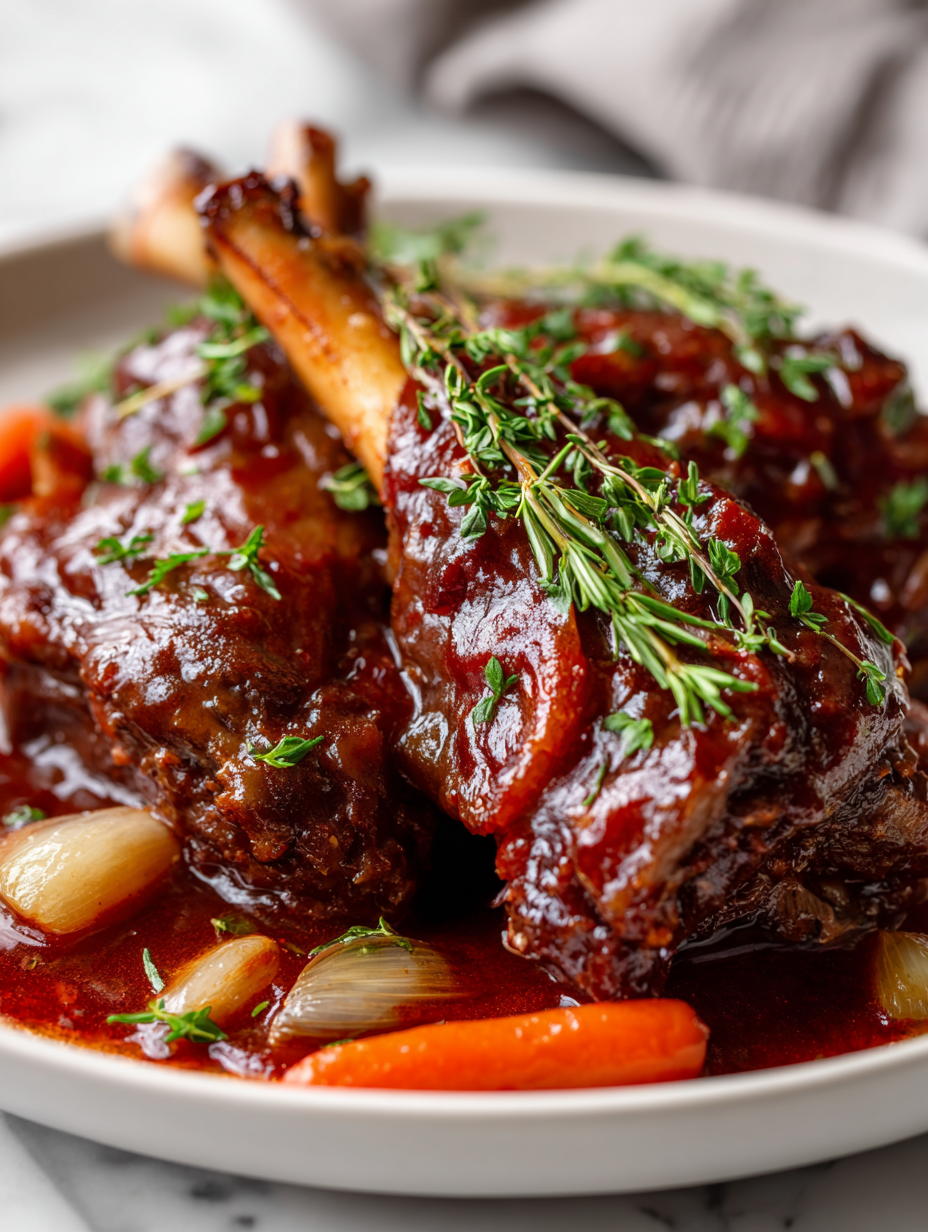
Braised Lamb Shanks in Red Wine
Ingredients
Equipment
Method
- Preheat your oven to 160°C (320°F).
- Pat the lamb shanks dry with paper towels, then season generously with salt and pepper.
- Heat olive oil in a Dutch oven over medium-high heat until shimmering. Add the shanks and sear until deeply browned on all sides, about 4-5 minutes per side. This builds a flavorful crust and seals in juices.
- Remove the browned shanks and set aside. In the same pan, add chopped onions and carrots, cooking until they soften and turn golden, about 8 minutes. The kitchen will fill with a sweet, caramelized aroma.
- Pour in the red wine and scrape up any browned bits from the bottom with a wooden spoon. Bring to a gentle simmer and cook until the wine reduces by half, about 4-5 minutes. This intensifies the flavor and creates a rich base.
- Return the lamb shanks to the pan, nestling them into the vegetables. Add garlic, thyme, and bay leaf. Pour in enough broth to cover the meat halfway, about 500 ml.
- Bring the mixture to a simmer on the stove, then cover the pan with a lid and transfer it to the preheated oven. Braise for 2.5 to 3 hours, or until the meat is fall-off-the-bone tender and easily separates with a fork.
- Halfway through cooking, gently turn the shanks to ensure even braising. If the liquid reduces too much, add a splash more broth or wine to keep the meat submerged.
- Once cooked, carefully remove the shanks and set aside to rest briefly. Strain the sauce through a fine sieve into a saucepan. Bring it to a gentle boil and reduce until glossy and thickened, about 10 minutes, stirring occasionally.
- Finish the sauce with a small knob of butter or a splash of wine if desired. Serve the lamb shanks generously covered with the rich, aromatic sauce, accompanied by crusty bread or mashed potatoes.
- Enjoy the tender, flavorful lamb shanks with their luscious wine and herb sauce, a perfect hearty yet elegant meal.
Pro tips for perfect lamb shanks
- Bolded tip: Use a hot pan for searing—aim for a deep, caramelized crust that locks in juices.
- Bolded tip: Deglaze with wine immediately after searing—scrape up browned bits for maximum flavor.
- Bolded tip: Keep the braising liquid just at a gentle simmer—avoid boiling to prevent toughening the meat.
- Bolded tip: Cover the pan tightly during oven braising—this traps moisture and ensures even, tender results.
- Bolded tip: Reduce the sauce until glossy and thick—this intensifies the wine and herb flavors, coating the meat beautifully.
- Bolded tip: Rest the shanks for 5 minutes after braising—allows juices to redistribute, making each bite juicier.
- Bolded tip: Taste and adjust seasoning after reduction—sometimes a pinch of salt or a splash of wine makes all the difference.
Common mistakes and how to fix them
- FORGOT to sear lamb shanks properly → Sear until deep golden and caramelized.
- DUMPED liquid prematurely → Keep braising liquid at a gentle simmer, add more if needed.
- OVER-TORCHED sauce → Reduce heat and stir constantly to prevent burning and bitterness.
- SKIPPED resting time → Allow meat to rest briefly for juices to redistribute.
Quick fixes and pantry swaps
- When sauce shimmers without crackling, splash in a splash of water to resuscitate the simmer.
- If meat is tough, dump the braising liquid, add more broth, and extend cooking time slightly.
- Over-torched sauce? Patch by stirring in a pat of butter for richness and to mellow the bitterness.
- Forgot to sear properly? Sear in batches until deep golden to develop rich flavor and prevent steaming.
- heading
Prep, store, and reheat tips
- You can prep the lamb shanks and sear them a day ahead. Store covered in the fridge for up to 24 hours. The aroma will be rich and meaty, just waiting to be finished.
- The sauce can be made entirely in advance. Reheat gently on the stove, watching for bubbling and aroma of wine and herbs to remind you of the start.
- Braised lamb shanks keep well in the fridge for up to 3 days. Reheat in a low oven or on the stovetop, until the meat is hot and the sauce is bubbling softly—smells of deep red wine and slow-cooked herbs.
- For longer storage, freeze the cooled lamb and sauce in airtight containers for up to 2 months. Thaw in the fridge overnight, then reheat until steaming and fragrant, with the sauce thickened and glossy.
Top questions about lamb shanks
1. How do I choose good lamb shanks?
Look for lamb shanks with plenty of marrow – it adds richness and deep flavor during braising.
2. Can I use any wine for the sauce?
Use a dry red wine like Cabernet or Merlot for a bold, fruity sauce that balances the richness.
3. How do I properly sear the lamb shanks?
Brown the shanks until they develop a deep, caramelized crust—this builds flavor and prevents sticking.
4. How long should I braise the lamb shanks?
Cook the shanks slowly at around 160°C (320°F) for 2.5–3 hours until the meat is very tender.
5. How do I know when the sauce is ready?
Reduce the sauce until it’s thick and glossy—this concentrates the flavors and coats the meat beautifully.
6. What if the sauce gets too thick or dry?
Add extra broth or wine if the liquid reduces too much during braising, to keep the meat moist.
7. Should I rest the meat after cooking?
Let the lamb rest for 5 minutes after braising; it helps juices redistribute and keeps the meat juicy.
8. Why strain the sauce before serving?
Strain the sauce to remove herbs and vegetable bits for a smooth, rich finish—then re-reduce if needed.
9. What’s the best side for lamb shanks?
Serve with crusty bread or creamy mashed potatoes to soak up the sauce and add textures.
10. How should I store and reheat leftovers?
Store leftovers in an airtight container in the fridge for up to 3 days; reheat gently until steaming.
This dish isn’t just about tender meat and rich sauce; it’s about the slow, deliberate process that makes the kitchen smell like a cozy Sunday afternoon. Every time I make lamb shanks with red wine sauce, I’m reminded that good things take time and patience, just like a quiet Sunday morning.
Sharing this meal feels like passing down a little piece of tradition—something comforting and unpretentious, yet special. It’s a reminder that sometimes, the simplest ingredients combined with a little care create the most memorable moments.

Hi, I’m Mia Bennett, the chef and storyteller behind Grounding in Tradition. I’m so glad you’re here. This blog is my way of preserving the flavors, techniques, and rituals that shaped me as both a cook and a professional chef. Grounding in Tradition is not about trends or shortcuts. It is about honoring where food comes from, understanding the hands that prepare it, and carrying forward recipes that deserve to be remembered.
Leave a Reply