
This dish started as a way to combine two of my favorite textures—crisp pork skin and smooth, tangy apple. There’s something about the contrast that makes each bite feel like a little celebration, even on a quiet Sunday evening. It’s honest comfort, dressed up just enough to feel special.
I remember the first time I got crispy pork belly right—skin crackling perfectly, meat juicy and tender. Paired with the bright, slightly sweet apple puree, it became a kind of dish I keep revisiting when I want something flavorful but simple. It’s not fancy, but it’s honest, and I think that’s what makes it memorable.
Focusing on the contrast between crispy pork belly and the silky, bright apple puree, this dish explores how textures and flavors can awaken a simple Sunday dinner into a sensory journey.
Celebrating texture and contrast
- Cracking through the crispy skin always feels like a small victory, accompanied by that irresistible pork aroma.
- The bright apple puree reminds me of lazy autumn afternoons, when everything feels just a little more vibrant.
- This dish brings back memories of family dinners, where simple ingredients made for the most satisfying bites.
- There’s a quiet pride in balancing the richness of pork belly with the fresh, tangy apple—the perfect harmony.
- Sometimes, I just crave the contrast of textures and flavors, and this combo delivers every single time.
Inspiration Behind the Dish
This dish was born out of a lazy Sunday afternoon craving for something both comforting and a little special. I had a pork belly in the fridge and was experimenting with ways to elevate its richness without losing that primal crunch. The apple puree came from a desire to add a bright, tangy counterpoint that would cut through the fat and bring a fresh sweetness. It’s a combination I keep coming back to, especially when I want to remind myself that simple ingredients can deliver a feast of textures and flavors.
Contextual origin, trivia, or history
- Pork belly has been a prized cut in Chinese and Filipino cuisines for centuries, often slow-roasted or braised for tenderness.
- The pairing of rich pork with tart apple dates back to rustic European farm tables, where seasonal ingredients were combined to enhance flavors naturally.
- Apple puree was once a popular accompaniment in medieval banquets, serving as a sweet counterbalance to hearty meats.
- Crispy pork skin, or crackling, became a sought-after texture in British and French cuisines during the 19th century, celebrated for its satisfying crunch.
Ingredient breakdown: key components
- Pork belly: I love that rich, fatty layer that turns irresistibly crispy when cooked right. If yours isn’t crisping, crank the heat higher—skin needs to crackle and puff up to get that perfect crunch.
- Apple: Bright, slightly tart, and juicy—my go-to is a firm Granny Smith. Swap in Honeycrisp for sweetness, but watch the sugar levels—too sweet and the dish loses balance.
- Salt: I rely on sea salt to heighten the pork’s savoriness. If you prefer a milder finish, reduce it slightly, but don’t skip it—fat needs that seasoning punch.
- Sugar: A touch of brown sugar helps caramelize the pork skin and adds depth. Skip or reduce if you’re watching sugar, but be aware the skin might not crisp up as well.
- Vinegar: A splash of apple cider vinegar in the puree brightens everything up. If you’re out, lemon juice makes a decent substitute, just add a little at a time to avoid overpowering the fruit’s natural flavor.
- Herbs: I use thyme or rosemary for a subtle herbal note. Fresh is best, but dried works if you crush it well—just sprinkle sparingly to avoid bitterness.
- Butter: A pat of butter in the apple puree makes it silky and rich. For a dairy-free version, a drizzle of good olive oil adds a nice sheen and flavor, but keep it light to preserve that bright tang.
Spotlight on key ingredients
Pork belly:
- I love that rich, fatty layer that turns irresistibly crispy when cooked right. If yours isn’t crisping, crank the heat higher—skin needs to crackle and puff up to get that perfect crunch.
- Apple: Bright, slightly tart, and juicy—my go-to is a firm Granny Smith. Swap in Honeycrisp for sweetness, but watch the sugar levels—too sweet and the dish loses balance.
Apple:
- Bright, slightly tart, and juicy—my go-to is a firm Granny Smith. Swap in Honeycrisp for sweetness, but watch the sugar levels—too sweet and the dish loses balance.
- Salt: I rely on sea salt to heighten the pork’s savoriness. If you prefer a milder finish, reduce it slightly, but don’t skip it—fat needs that seasoning punch.
Notes for ingredient swaps
- Dairy-Free: Swap butter in the apple puree for a drizzle of good olive oil. It won’t be as rich but keeps the bright, silky texture.
- Sugar Alternatives: Use honey or maple syrup instead of white or brown sugar in the apple puree. Adds a subtle, natural sweetness with a hint of complexity.
- Pork Cut: Try pork shoulder if pork belly isn’t available. It’s less crispy but still tender and flavorful with longer slow roasting.
- Vinegar: Lemon juice can replace apple cider vinegar for brightness. Keep in mind, it’s a bit sharper, so add gradually.
- Herbs: Fresh thyme or rosemary are ideal, but dried herbs work if crushed well. Use a pinch to avoid bitterness.
- Apple Varieties: Granny Smith is tart and firm—swap with Honeycrisp for sweeter, juicier notes, but adjust sugar accordingly.
- Oil for Skin: If skin isn’t crisping, a light brush of vegetable oil before roasting can help achieve that crackling texture.
Equipment & Tools
- Oven: To roast the pork belly evenly and develop crisp skin.
- Wire rack: To elevate the pork, allowing hot air to circulate and crisp the skin.
- Sharp knife: To score the skin precisely without cutting into the meat.
- Saucepan: To cook and mash the apple puree.
- Spatula or spoon: To stir the apples and mash them smoothly.
- Baking sheet: To catch drippings and support the wire rack.
Step-by-step guide to pork belly
- Preheat your oven to 220°C (430°F). Score the pork belly skin in a crosshatch pattern, about 1 cm apart, being careful not to cut into the meat. Pat dry with paper towels—dry skin helps it crisp up.
- Rub the pork belly all over with sea salt, making sure to work some into the scored skin. Add a bit of black pepper and optional herbs such as thyme or rosemary on the meat side.
- Place the pork belly on a wire rack set over a baking sheet, skin side up. Roast in the oven for 30 minutes to start rendering the fat and crisping the skin.
- After 30 minutes, lower the oven temperature to 160°C (320°F). Continue roasting for another 1 hour, basting occasionally with rendered fat, until the meat is tender and the skin crackles well.
- While the pork roasts, prepare the apple puree. Peel and core 3-4 tart apples (like Granny Smith). Chop into chunks and cook in a saucepan with a splash of water and a teaspoon of sugar over medium heat.
- Simmer the apples, stirring occasionally, until very soft—about 10-15 minutes. Mash or blend until smooth. Stir in a teaspoon of apple cider vinegar and a pinch of salt for brightness.
- Once the pork belly is cooked, transfer it to a plate and let it rest for 10 minutes. Resting allows the juices to redistribute, keeping the meat juicy and making skin easier to cut.
- Slice the pork belly into thick strips. Serve with a generous spoonful of the bright apple puree on the side or draped over the meat. Finish with a sprinkle of flaky sea salt if desired.
- For presentation, arrange slices on a warm plate, add a dollop of apple puree, and sprinkle with herbs or cracked black pepper for extra flavor.
- Enjoy the contrast of the crispy, crackling skin with the silky, tangy apple puree—each bite a balance of textures and bright flavors.
Let the pork rest for at least 10 minutes, tented loosely with foil. Slice and serve with the warm apple puree on the side or draped over the slices. Finish with a light sprinkle of sea salt or herbs if desired.
How to Know It’s Done
- Crackling: Skin should be blistered and golden-brown, crackling loudly when pressed.
- Juiciness: Meat jiggles slightly when pressed, indicating tenderness.
- Appearance: The pork should be caramelized and crispy on top, with no excess moisture.
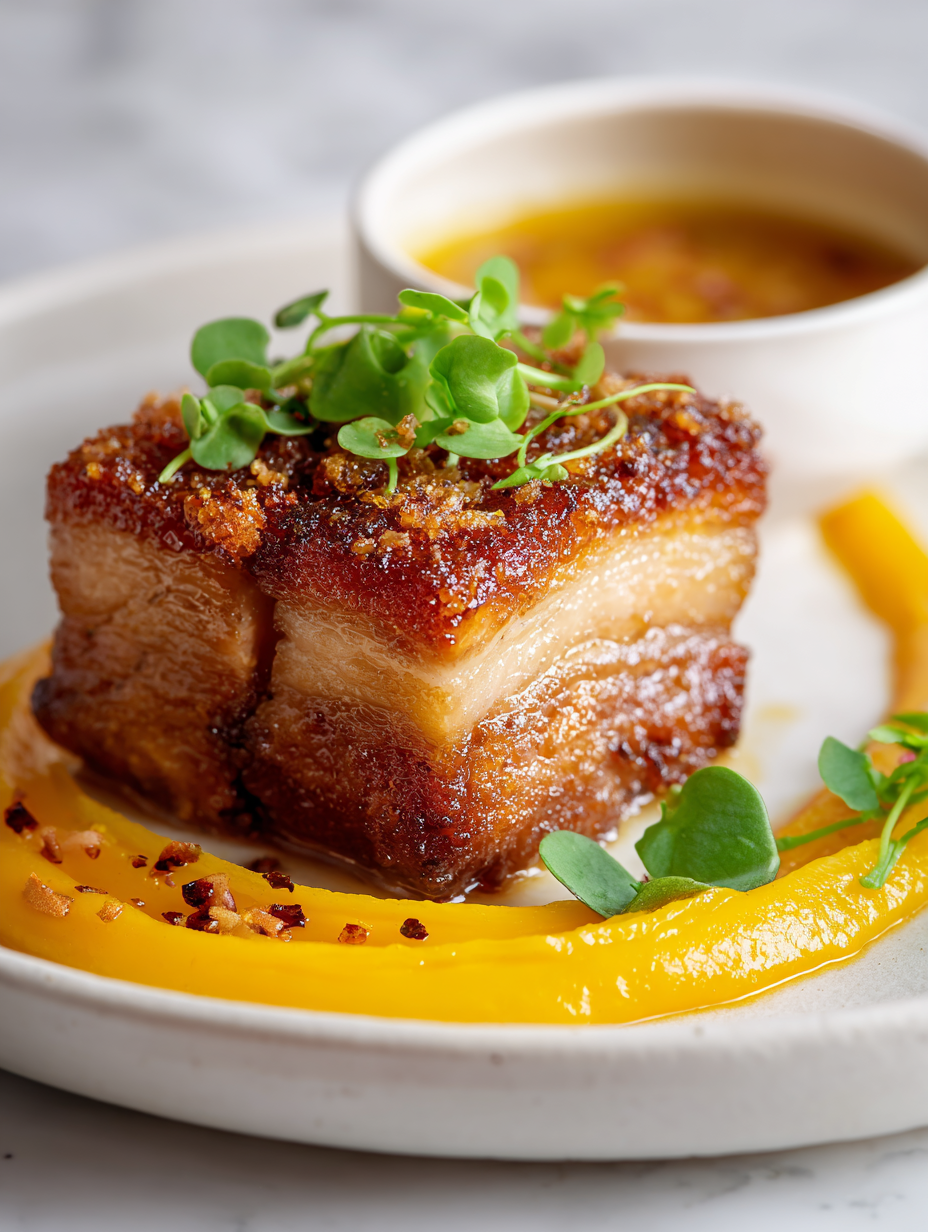
Crispy Pork Belly with Bright Apple Puree
Ingredients
Equipment
Method
- Preheat your oven to 220°C (430°F). Carefully score the pork belly skin in a crosshatch pattern, about 1 cm apart, ensuring not to cut into the meat. Pat the skin dry with paper towels to remove excess moisture, which helps achieve crispness.
- Rub the pork belly all over with sea salt, pressing some into the scored skin to enhance crisping. If using herbs, sprinkle them over the meat side for added flavor.
- Place the pork belly on a wire rack set over a baking sheet, skin side up. Roast in the hot oven for 30 minutes to begin rendering fat and crackling the skin.
- Reduce the oven temperature to 160°C (320°F) and continue roasting for another 1 hour, basting occasionally with rendered fat to keep the meat juicy and promote crispy skin.
- While the pork roasts, prepare the apple puree. Peel, core, and chop the apples. Place them in a saucepan with a splash of water and a teaspoon of sugar, cooking over medium heat until very soft and fragrant, about 10-15 minutes.
- Mash the cooked apples with a spatula or blend until smooth. Stir in apple cider vinegar and a pinch of salt to brighten the puree, adjusting to taste.
- Remove the pork from the oven and let it rest, tented loosely with foil, for at least 10 minutes. Resting helps the juices settle and makes slicing easier.
- Slice the pork belly into thick pieces, hearing a satisfying crackle as you cut through the crispy skin. Arrange the slices on a serving plate.
- Serve the pork slices with a generous spoonful of the bright apple puree on the side or draped over the meat. For extra crispness, briefly broil the pork if needed, watching carefully to prevent burning.
- Finish with a sprinkle of sea salt or fresh herbs for added flavor. Enjoy the contrast of crispy skin with silky, tangy apple puree in every satisfying bite.
Pro tips for perfect pork belly
- Crisp skin: Ensure skin is completely dry before roasting; moisture is the enemy of crackling.
- Scoring method: Score skin in a crosshatch pattern to help render fat and promote even crisping.
- Oven temp switch: Start high at 220°C (430°F) to crackle skin, then lower to 160°C (320°F) for tenderness.
- Fat rendering: Roast skin side up to allow fat to drip down and aid in crisping; baste occasionally for extra crunch.
- Apple puree: Cook apples gently—soft and fragrant—until they release a sweet aroma, then mash smoothly.
- Resting time: Let the pork rest at least 10 minutes after roasting; it keeps the juices in and skin crisp.
- Serving tips: Slice pork with a sharp knife, and serve with warm apple puree to contrast textures and flavors.
Common mistakes and how to fix them
- FORGOT to score skin deeply → Score more thoroughly for better crackle.
- DUMPED too much salt → Use salt sparingly; too much can overpower the pork flavor.
- OVER-TORCHED skin → Reduce oven temperature if skin burns or darkens too quickly.
- MISSED resting time → Rest pork for at least 10 minutes to retain juices and crispness.
Quick fixes and pantry swaps
- If skin isn’t crackling, increase oven temperature or dry thoroughly before roasting.
- When pork is too fatty, score deeper to help render excess fat during cooking.
- Splash lemon juice into apple puree if vinegar runs out for a quick bright fix.
- Patch over burnt skin with a bit of foil if it darkens too quickly, then lower heat.
- Shield the pork with foil if edges brown too fast, preserving juicy interior.
Prep, store, and reheat tips
- You can prepare the apple puree a day in advance; store covered in the fridge for up to 2 days. The vibrant brightness may mellow slightly over time.
- Roasted pork belly can be kept in the fridge for up to 3 days. Keep it in an airtight container or tightly wrapped to maintain crispness and prevent it from drying out.
- Reheat pork belly in a 150°C (300°F) oven for about 10-15 minutes until warmed through and the skin regains some of its crisp. Watch for steam; don’t overdo it or skin might soften.
- The apple puree can be gently reheated in a saucepan over low heat, stirring occasionally. It should be heated until just warm, with a fresh, bright aroma and silky texture.
- For best texture, reheat pork belly on a wire rack in the oven. If it loses some crispness, briefly broil on high for 1-2 minutes—listen for that crackling sound, then serve immediately.
Top questions about Pork Belly with Apple Puree
1. How do I select the best pork belly?
Look for pork belly with a good layer of skin and marbling. The skin should be dry and firm before roasting for crispiness.
2. Why is scoring the skin important?
Score the skin deeply but carefully to avoid cutting into the meat. This helps fat render and skin crisp up.
3. How do I get crispy skin without burning it?
Roast the pork at high heat initially to crackle the skin, then lower the temp for tender meat. Keep an eye on the skin to prevent burning.
4. Which apples are best for the puree?
Use tart, firm apples like Granny Smith for the puree. They break down easily and offer a bright, tangy contrast.
5. Why is resting the pork important?
Rest the pork for at least 10 minutes after roasting. It allows juices to settle, making the meat juicy and easier to slice.
6. Can I modify the sweetness of the puree?
Adjust the sugar in the apple puree based on tartness—more for a sweeter balance, less for a sharper contrast.
7. What if my pork skin isn’t crispy?
If the pork skin isn’t crisping properly, increase oven temperature slightly or ensure skin is thoroughly dried before roasting.
8. How should I store leftovers?
Store leftover pork in an airtight container in the fridge for up to 3 days. Reheat gently to preserve crispness.
9. How do I reheat to keep the skin crispy?
Reheat pork in a 150°C (300°F) oven for about 10-15 minutes. For extra crispness, broil for 1-2 minutes at the end.
10. How do I fix thick or separated puree?
If the apple puree separates or becomes too thick, stir in a splash of warm water or apple juice to loosen it up.
This dish isn’t just about the crispy pork and bright apple; it’s about the little moments of satisfaction—cracking through that skin, the aroma of roasting fat, the tang of fresh puree. It’s honest food that reminds me to appreciate simplicity and contrast in every bite.
Right now, with the season’s bounty and a craving for straightforward comfort, this recipe hits just right. It’s a reminder that good cooking isn’t about fuss, but about paying attention to textures and flavors that wake up the palate and make everyday meals special.

Hi, I’m Mia Bennett, the chef and storyteller behind Grounding in Tradition. I’m so glad you’re here. This blog is my way of preserving the flavors, techniques, and rituals that shaped me as both a cook and a professional chef. Grounding in Tradition is not about trends or shortcuts. It is about honoring where food comes from, understanding the hands that prepare it, and carrying forward recipes that deserve to be remembered.
Leave a Reply