
There’s something about sticky pork ribs that feels like a messy, joyful celebration. I love the way the caramelized glaze clings to every crack and crevice, each bite a perfect mix of smoky, sweet, and tangy. It’s not fancy, but it’s honest and satisfying—the kind of dish that makes weekend gatherings feel special without fuss.
I’ve always thought the magic lies in balancing those flavors just right. It’s a dance between the deep smokiness of the grill, the sugary richness of the glaze, and that sharp kick of vinegar or citrus. This recipe is my way of capturing that messy, flavorful chaos—something you can’t quite plan, but always crave.
Focusing on the art of balancing sweet, smoky, and tangy flavors to create irresistibly sticky pork ribs that feel like a cozy, messy feast for any weekend gathering.
Embracing Messy, Flavorful Joy
- There’s something about sticky pork ribs that triggers a rush of childhood memories—messy fingers, smoky afternoons, and the kind of flavor that sticks with you long after the last bite.
- I used to think ribs were a weekend luxury, but now I see them as a celebration of simplicity—just good meat, good heat, and a glaze that makes everyone go quiet in awe.
- Cooking these ribs feels like an act of love—messy, slow, but so worth every sticky, smoky second. It’s a reminder to savor the chaos.
- Sharing a plate of ribs always turns a gathering into a real moment—laughter, sauce on your hands, and that shared joy of something perfectly imperfect.
- Nothing beats the satisfaction of peeling off the crackly, caramelized glaze and biting into tender meat that’s been kissed by smoke and patience.
The inspiration behind this dish
Cooking these ribs started as a way to use up a leftover pork shoulder that had been sitting in my fridge a bit too long. Instead of tossing it, I decided to transform it into something sticky, smoky, and a little messy—just like the best weekend feasts. The glaze, with its tang of vinegar and honey, reminded me of summer barbecues with friends, where everyone’s fingers are coated in sauce and laughter fills the air. It’s a simple dish, but one that’s become a staple whenever I want something honest and satisfying, with a little bit of chaos in every bite.
Fun facts about sticky pork ribs
- Pork ribs have been a staple in many cultures, from American barbecue to Asian char siu traditions, each with their own twist on sticky, flavorful glazing.
- The method of caramelizing sauces onto meat dates back centuries, originally as a way to preserve and add flavor before refrigeration was common.
- In Chinese cuisine, ‘char siu’ ribs are famous for their sweet and savory glaze, which inspired many Western adaptations of sticky ribs.
- The concept of sticky, glazed ribs gained popularity in the U.S. during the barbecue boom of the mid-20th century, blending Southern smoke with sweet sauces.
- Historically, the use of honey, molasses, or sugar in barbecue sauces was a way to create that irresistible caramelized layer that defines sticky ribs.
Ingredient breakdown: key components
- Pork ribs: I look for meaty, well-marbled ribs with a good layer of fat—this keeps them tender and flavorful. Swap with chicken thighs if you want a leaner, quicker option, but expect less sticky goodness.
- Brown sugar: It’s the backbone of that deep caramelization. If you prefer a less sweet glaze, cut back or try honey for a more floral, fragrant note.
- Soy sauce: Adds saltiness and umami that balances the sweetness. Tamari works well if you need gluten-free, but reduce other salt to avoid over-salting.
- Apple cider vinegar: Brightens everything up with a tangy kick. Lemon juice can replace it in a pinch, but you’ll lose some of that mellow, fruity depth.
- Smoked paprika: I love the smoky aroma it adds—go for Hungarian if possible. Chipotle powder gives a spicier, more complex smoky punch, so adjust to taste.
- Honey: It’s the final touch that creates that luscious, gooey glaze. Maple syrup can work as a substitute, but it’s a bit more floral and less sticky.
- Garlic: I use plenty—fresh minced for punch, or garlic powder if I’m short on time. Roasted garlic adds a mellow, sweet richness, so try that if you want a softer flavor.
Spotlight on key ingredients
Pork Ribs:
- I look for meaty, well-marbled ribs with a good layer of fat—this keeps them tender and flavorful. Swap with chicken thighs if you want a leaner, quicker option, but expect less sticky goodness.
- Brown sugar: It’s the backbone of that deep caramelization. If you prefer a less sweet glaze, cut back or try honey for a more floral, fragrant note.
Sauces & Sweeteners:
- Soy sauce: Adds saltiness and umami that balances the sweetness. Tamari works well if you need gluten-free, but reduce other salt to avoid over-salting.
- Apple cider vinegar: Brightens everything up with a tangy kick. Lemon juice can replace it in a pinch, but you’ll lose some of that mellow, fruity depth.
- Honey: It’s the final touch that creates that luscious, gooey glaze. Maple syrup can work as a substitute, but it’s a bit more floral and less sticky.
Notes for ingredient swaps
- Pork Ribs: I prefer baby back ribs for their tenderness, but spare ribs work well if you want more meat and a chunkier bite. Adjust cooking time accordingly.
- Brown Sugar: Use coconut sugar or maple sugar for a slightly different flavor profile, but expect a different level of caramelization and sweetness.
- Soy Sauce: Tamari makes a good gluten-free swap with a richer umami, but reduce salt slightly to compensate.
- Apple Cider Vinegar: Lemon juice can replace it if you want a brighter, sharper tang, though it lacks the fruity depth.
- Smoked Paprika: Chipotle powder adds a smoky heat—use sparingly if you prefer less spice, or try Hungarian paprika for a milder smoky aroma.
- Honey: Maple syrup can substitute, offering a floral sweetness, but it might not caramelize quite as deeply or sticky.
- Garlic: Roasted garlic gives a mellow, sweet note—if you’re in a rush, garlic powder works but loses that fresh punch.
Equipment & Tools
- Oven: To cook the ribs slowly and evenly.
- Baking sheet lined with foil: To contain drips and facilitate easy cleanup.
- Small saucepan: To prepare the glaze.
- Basting brush: To apply the glaze evenly onto the ribs.
- Kitchen tongs: To handle hot ribs safely.
- Aluminum foil: To cover and trap heat during baking.
- Meat thermometer (optional): To check internal temperature or doneness—aim for around 70°C (160°F).
Step-by-step guide to sticky pork ribs
- Preheat your oven to 150°C (300°F). Gather your ribs, a baking sheet, foil, a small saucepan, and a basting brush. Pat ribs dry with paper towels—removes excess moisture for better caramelization.
- Remove the thin silver skin from the back of the ribs—use a paper towel to grip and peel it off. This helps the glaze penetrate better and keeps ribs tender.
- Mix your dry rub—salt, black pepper, smoked paprika, garlic powder—in a small bowl. Rub it generously over all sides of the ribs. Let sit for 15 minutes while you prepare the glaze.
- In a small saucepan, combine soy sauce, apple cider vinegar, brown sugar, honey, minced garlic, and smoked paprika. Bring to a simmer over medium heat (around 80°C/175°F). Stir until sugar dissolves and glaze thickens slightly, about 5-7 minutes. Remove from heat.
- Place ribs on a baking sheet lined with foil, bone side down. Cover tightly with foil. Bake in the oven for 2.5 to 3 hours until meat is tender and pulls away from the bones when gently tugged.
- Remove ribs from oven, increase oven temp to 220°C (430°F). Uncover ribs, brush generously with the sticky glaze, and return to the oven uncovered. Bake for another 15-20 minutes, turning once and brushing with more glaze halfway through.
- During the last few minutes, the glaze should become glossy and caramelized—listen for a crackle as the sugars set. Keep an eye on them so they don’t burn. If they start to burn, lower oven temp slightly or cover with foil briefly.
- Rest the ribs loosely covered with foil for about 10 minutes. This allows juices to redistribute, making the meat even more tender. Slice between the bones, serve with extra glaze on the side.
Let the ribs rest loosely covered with foil for 10 minutes. Then slice between the bones and serve with extra glaze or your favorite sides. The resting helps keep the meat juicy and tender.
How to Know It’s Done
- Meat pulls cleanly from the bone with gentle tug (tenderness).
- Glaze is sticky, glossy, and deep amber in color.
- Crust is caramelized and crackly, not burned or charred.
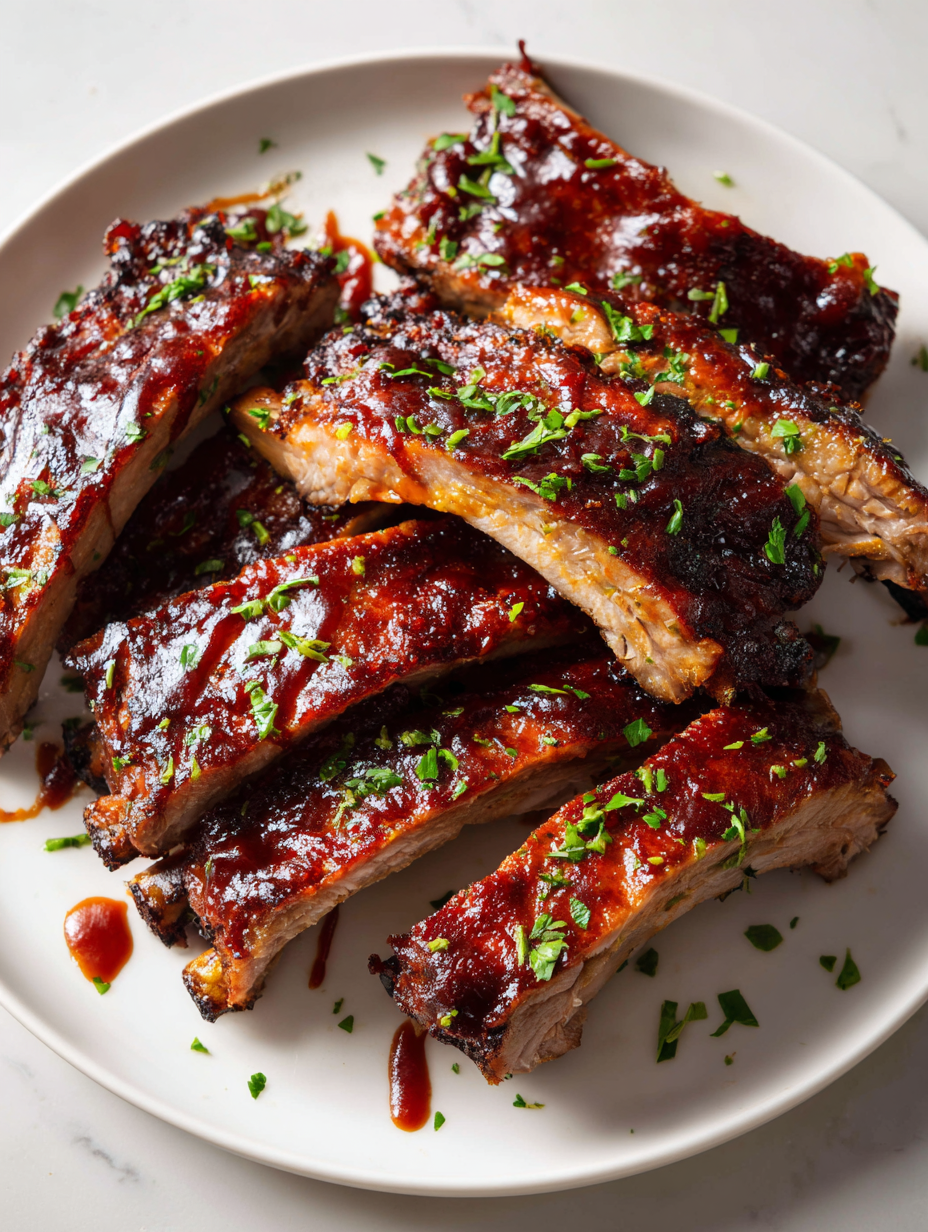
Sticky BBQ Pork Ribs
Ingredients
Equipment
Method
- Preheat your oven to 150°C (300°F). Pat the ribs dry with paper towels to remove excess moisture, which helps the glaze caramelize better.
- Remove the thin silver skin from the back of the ribs by slipping a paper towel underneath and peeling it off — this step allows the glaze to penetrate and keeps the ribs tender.
- Mix salt, black pepper, and smoked paprika in a small bowl, then rub this dry spice mixture generously over all sides of the ribs. Let them sit while you prepare the glaze.
- In a small saucepan, combine soy sauce, apple cider vinegar, brown sugar, honey, and minced garlic. Bring the mixture to a gentle simmer over medium heat, stirring until the sugar dissolves and the glaze thickens slightly — about 5-7 minutes. Remove from heat.
- Place the ribs on a baking sheet lined with foil, bone side down. Cover tightly with foil to trap the moisture, then bake in the preheated oven for 2.5 to 3 hours until the meat is tender and pulls away from the bones when gently tugged.
- Increase the oven temperature to 220°C (430°F). Uncover the ribs, brush generously with the sticky glaze using a basting brush, then return to the oven uncovered for another 15-20 minutes. Turn the ribs once halfway through and brush with more glaze for even coating.
- Watch as the glaze bubbles, crackles, and turns a deep amber — this is when the caramelization happens. If the glaze starts to burn, reduce the oven temperature slightly or shield the ribs with foil.
- Remove the ribs from the oven and let them rest loosely covered with foil for about 10 minutes. This helps the juices redistribute, making the meat even more tender and flavorful.
- Slice between the bones to serve. The ribs should be tender, sticky, and glossy with a crackly, caramelized exterior. Serve with extra glaze on the side if desired.
Notes
Tips & Tricks for Sticky Ribs
- Bolded mini-head: Use a sharp knife to carefully scrape off the silver skin from the ribs—this helps the glaze penetrate better.
- Bolded mini-head: When simmering your glaze, keep it gentle—avoid boiling too hard to prevent burning or bitterness.
- Bolded mini-head: For extra smoky flavor, add a small pinch of smoked paprika directly into the glaze during simmering.
- Bolded mini-head: Baste the ribs generously during the final bake to build up that thick, sticky coating.
- Bolded mini-head: Rest the ribs loosely covered with foil for at least 10 minutes—this redistributes juices and keeps them juicy.
- Bolded mini-head: If the glaze starts to crackle or burn at the edges, reduce oven temperature slightly or shield with foil.
- Bolded mini-head: For a more intense smoky aroma, toss the ribs on the grill for the last 5-10 minutes after glazing.
Common mistakes and how to fix them
- UNDER-COOKED: Ribs should be tender and pull away easily—if not, bake longer and check again.
- SUGAR CARAMELIZED: If glaze burns or becomes bitter, lower oven temp or cover ribs to prevent charring.
- LACK OF GLAZE: Not sticky enough? Increase simmer time slightly or brush more glaze during final bake.
- MEAT TOUGH: If ribs are tough, ensure slow baking at low temp and allow resting time to tenderize.
Quick Fixes for Sticky Ribs
- When glaze is too thin, splash in a little honey and simmer briefly until sticky.
- If ribs are dry, patch with extra glaze during the final bake and cover to re-moisten.
- Splash a dash of soy sauce if the glaze lacks depth and umami for richer flavor.
- Patch burnt spots with more glaze and lower oven temp to avoid charring.
- Shield crackling edges with foil when shimmer from caramelization turns bitter.
Prep, store, and reheat tips
- You can prep the ribs by removing the silver skin and applying the dry rub up to a day in advance; keep them refrigerated overnight for more flavor penetration.
- The glaze can be made ahead and stored in the fridge for up to 3 days. Reheat gently on the stove to avoid burning off the sticky, smoky aroma.
- Cooked ribs will keep in an airtight container in the fridge for 3-4 days. Reheat in a low oven (around 150°C/300°F) covered with foil, basting with extra glaze if needed, until warmed through and sticky again.
- For longer storage, freeze cooked ribs in a sealed bag or container for up to 2 months. Thaw overnight in the fridge, then reheat slowly, checking for that glossy, gooey finish.
Frequently Asked Questions
1. What kind of pork ribs should I buy?
Look for ribs with a good layer of meat and some marbling—these stay tender and flavorful. You can swap with chicken thighs if you prefer a leaner option, but expect less stickiness.
2. Can I use a different sweetener?
Brown sugar is key for that deep caramelization. If you want less sweetness, try honey or maple syrup, but the glaze won’t be as thick and sticky.
3. What’s a good soy sauce substitute?
Yes, tamari works well as a gluten-free soy sauce substitute. It’s richer in umami, but reduce the salt in your recipe to keep the flavor balanced.
4. Is there a substitute for apple cider vinegar?
Apple cider vinegar adds a mellow tang that balances the sweetness. Lemon juice can work if you prefer a sharper, brighter acid, though it’s less fruity.
5. How can I add more smoky flavor?
Smoked paprika imparts a smoky aroma and flavor. You can also try chipotle powder for a spicier, more complex smoky taste—use sparingly.
6. My glaze isn’t sticky, what do I do?
If your glaze isn’t sticky enough, simmer it a little longer until it thickens and becomes glossy, then brush onto the ribs again before the final bake.
7. How do I know when the ribs are done?
To prevent overcooking, check the ribs after about 2.5 hours—they should be tender and pulling away from the bones but not falling apart.
8. How often should I baste the ribs?
Baste the ribs generously during the last baking phase. Keep an eye on them to avoid burning—glaze should crackle and shimmer, not burn.
9. How should I store and reheat leftovers?
Refrigerate cooked ribs in an airtight container for up to 4 days. Reheat in a low oven, covered with foil, until hot and sticky again, about 20 minutes at 150°C (300°F).
10. What if my ribs turn out dry after reheating?
If the ribs seem dry after reheating, brush with extra glaze and cover with foil, then heat slowly to restore moisture and flavor.
There’s something about the sticky, smoky aroma of these ribs that immediately takes me back—messy fingers, summer backyard cookouts, and that irresistible tang. It’s a dish that demands patience but pays off with every tender, caramelized bite, making it perfect for lazy weekends or spontaneous gatherings.
Cooking these ribs feels like an act of pure, honest joy—no fuss, just bold flavors and good company. Once they’re pulled from the oven, the aroma alone will draw everyone in, and that sticky, smoky glaze will have everyone reaching for seconds. It’s a messy, satisfying kind of magic that sticks with you long after the last bite.

Hi, I’m Mia Bennett, the chef and storyteller behind Grounding in Tradition. I’m so glad you’re here. This blog is my way of preserving the flavors, techniques, and rituals that shaped me as both a cook and a professional chef. Grounding in Tradition is not about trends or shortcuts. It is about honoring where food comes from, understanding the hands that prepare it, and carrying forward recipes that deserve to be remembered.
Leave a Reply