
Vegan stuffed peppers might seem straightforward, but I like to think of them as a canvas for secret spices that bring a nostalgic punch. This recipe is my little rebellion against the plain, everyday vegan meals—because sometimes, a sprinkle of the right blend can turn a simple dish into a memory. It’s about those warm, fragrant aromas that fill the kitchen, reminding me of childhood dinners and the little comforts of home.
What makes this dish special isn’t just the peppers themselves, but how a few well-chosen spices can evoke a sense of familiarity and warmth—like a hug in every bite. I’ve tinkered with different fillings, but it’s that secret spice mix that truly transforms the humble into something memorable. It’s a reminder that even plant-based meals can be rooted in tradition, comfort, and a touch of culinary mischief.
Focusing on how using a secret spice blend transforms ordinary vegan stuffed peppers into a comforting, nostalgic dish that evokes memories of childhood meals, even with plant-based ingredients.
A Secret Spice for Nostalgic Bites
- This dish reminds me of summer evenings spent in my grandma’s kitchen, the smell of roasted peppers lingering in the air.
- I love how a simple sprinkle of smoked paprika can take these peppers from everyday to festive in minutes.
- There’s a quiet pride in creating a filling that’s hearty enough to satisfy but still light enough for a weekday dinner.
- Every time I make these, I feel a little bit like I’m reclaiming childhood comfort, but with a modern, plant-based twist.
- Sharing these stuffed peppers always sparks a nostalgic glow, even among friends who aren’t vegan—proof that good food crosses all boundaries.
A Flavorful Spin on Comfort Food
- This recipe grew out of a late-night craving for something cozy and satisfying, but with a twist. I was rummaging through my pantry and found a forgotten jar of harissa, which I decided to incorporate into the filling. The smoky, spicy aroma transformed the dish in a way that felt both unexpected and familiar. It’s funny how a single ingredient can turn a simple stuffed pepper into a memorable moment, reminding me that good cooking often comes from playful experimentation.
- Every time I make these peppers, I think about how a little boldness in flavor can shake up even the most traditional dishes. It’s like giving a classic a modern edge, and that’s what keeps me coming back to this recipe. Plus, I love the process—stuffing, roasting, and then sharing that first bite when the peppers are still warm and bursting with flavor. It’s honest comfort, elevated just enough to feel special.
- heading: ‘A Flavorful Spin on Comfort Food’
Contextual origin, trivia, or history
- Vegan stuffed peppers have roots in Mediterranean cuisine, where stuffed vegetables date back centuries as a humble, hearty meal.
- Historically, peppers were stuffed with bread crumbs, herbs, and rice—simple ingredients that turned into festive family favorites over generations.
- The dish evolved globally, with variations in Middle Eastern and Eastern European kitchens, each adding their own spice blends and fillings.
- In the 20th century, stuffed peppers gained popularity as a versatile, affordable comfort food that could adapt to any dietary need—vegan or not.
- Today, they’re often seen in plant-based cooking classes, celebrated for their versatility and the way they showcase flavor layering.
Ingredient breakdown: key components
- Bell peppers: I prefer large, firm peppers with a bright red hue that feel heavy in the hand and smell sweet and grassy. Swap for poblano if you want a smoky kick, but avoid mushy peppers by choosing fresh ones.
- Quinoa: I love the nutty aroma of toasted quinoa, which adds texture and substance. If you don’t have quinoa, couscous works well, but it’s softer and less hearty. Rinse thoroughly to keep it fluffy.
- Tomato paste: I use a good spoonful for deep, umami richness; it’s rich and concentrated, almost savory-sweet. For a milder taste, try sun-dried tomato spread, but it’s less vibrant in color.
- Herbs & spices: I often toss in cumin, smoked paprika, and a pinch of cinnamon for warmth and complexity. Fresh parsley brightens the filling, but dried herbs can substitute—just use less, as they’re more potent.
- Plant-based cheese (optional): I love a sprinkle of vegan feta or crumbled cashew cheese; it melts into the filling and adds a tang. For a creamier texture, try blending soaked cashews, but skip if you want a lighter bite.
- Olive oil: I drizzle a bit into the filling for richness and into the peppers before roasting for that golden, slightly crispy edge. Use avocado oil for a milder flavor, but avoid overly strong oils that can overpower the spices.
Spotlight on key ingredients
Bell peppers:
- I choose large, firm peppers that feel heavy and smell sweet and grassy. They hold stuffing well and roast to a tender, slightly charred finish.
- Swap for poblano peppers if you want a smoky, earthy flavor, but avoid those that are soft or shriveled, as they won’t hold up during roasting.
Quinoa:
- I love the nutty aroma and fluffy texture of toasted quinoa, which adds a satisfying bite. Rinse thoroughly to avoid bitterness and keep it light.
- If you don’t have quinoa, couscous works as a quick substitute, but it’s softer and less chewy. Toast it lightly for extra flavor if desired.
Notes for ingredient swaps
- Vegetables: Zucchini or eggplant can replace peppers, offering a milder flavor and softer texture.
- Grains: Bulgur or millet instead of quinoa, giving a different chewiness and nutty note.
- Tomato paste: Concentrated roasted red pepper or sun-dried tomato spread can add richness with a different depth.
- Herbs & spices: Swap fresh herbs for dried ones, but use less since dried are more potent; add a smoky chipotle for a different heat.
- Vegan cheese: Nutritional yeast for cheesy flavor, or omit entirely for a lighter, more vegetable-forward filling.
- Oil: Coconut oil adds a subtle sweetness, or use sesame oil for a toasted, nutty aroma, but keep in mind the flavor shift.
Equipment & Tools
- Sharp knife: Cut peppers and dice vegetables.
- Baking dish: Hold peppers while roasting.
- Mixing bowl: Combine quinoa, spices, and vegetables.
- Spoon: Stuff peppers evenly.
Step-by-step guide to stuffed peppers
- Equipment & Tools: Gather a sharp knife (for cutting peppers), a baking dish (to hold peppers), a mixing bowl (for filling), and a spoon (to stuff peppers).
- Preheat your oven to 200°C (390°F). Line the baking dish with parchment for easy cleanup.
- Cut the tops off the peppers and remove seeds and membranes. Keep the tops to serve as lids if desired.
- In a pan over medium heat (around 150°C / 300°F), warm a tablespoon of olive oil. Sauté chopped onion and garlic until fragrant, about 3-4 minutes.
- Add cooked quinoa, chopped tomatoes, and spices to the pan. Stir well and cook for another 2-3 minutes until heated through. Adjust seasoning to taste.
- Stuff each pepper generously with the filling using a spoon. Place them upright in the baking dish. Cover with foil if you prefer softer peppers.
- Bake in the preheated oven for 25-30 minutes. Check for a slight char on the edges and a tender feel when pierced with a fork.
- Remove from oven and let rest for 5 minutes. If you used pepper tops as lids, reattach them now to keep the filling warm and look pretty.
- Finish with a sprinkle of fresh herbs or a drizzle of olive oil. Serve warm, letting the aroma of spices fill your kitchen.
Let the peppers rest for 5 minutes out of the oven. Finish with fresh herbs, a drizzle of olive oil, and serve directly from the baking dish. For best flavor, serve slightly warm, allowing the spices to settle and aroma to intensify.
How to Know It’s Done
- Peppers are tender and slightly blistered on the edges.
- Filling is hot and slightly bubbling when removed from oven.
- Peaks of filling are firm but not dry, with no excess moisture or raw quinoa.
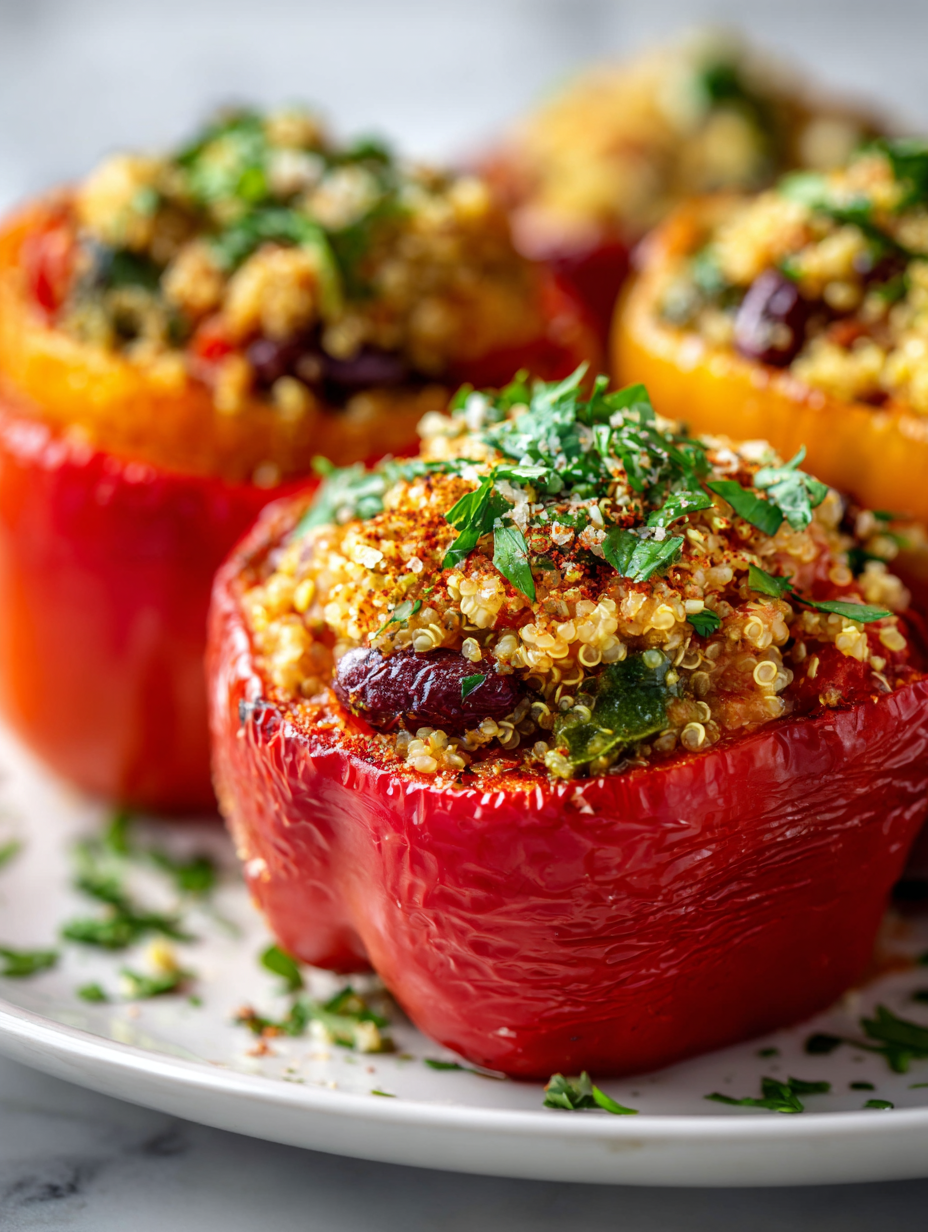
Vegan Stuffed Peppers with Secret Spice Blend
Ingredients
Equipment
Method
- Preheat your oven to 200°C (390°F). Line a baking dish with parchment for easy cleanup.
- Use a sharp knife to carefully cut off the tops of the bell peppers and remove the seeds and membranes, creating a hollow cavity. Keep the tops to serve as lids if desired.
- In a dry skillet over medium heat, toast the quinoa for 2-3 minutes until fragrant and slightly golden, stirring frequently. Transfer to a pot and cook with 2 cups of water until fluffy, about 15 minutes. Fluff with a fork and set aside.
- While the quinoa cooks, heat 1 tablespoon of olive oil in a pan over medium heat. Sauté the minced garlic until fragrant, about 30 seconds, then add chopped tomatoes, tomato paste, cumin, smoked paprika, and cinnamon. Cook for 3-4 minutes, stirring occasionally, until the mixture is bubbling and aromatic.
- Combine the cooked quinoa, tomato mixture, chopped parsley, and a drizzle of the remaining olive oil in a mixing bowl. Stir well to incorporate all flavors and spices evenly.
- Stuff each hollowed-out pepper generously with the quinoa filling, pressing down lightly to pack. Place the stuffed peppers upright in the prepared baking dish.
- If using, sprinkle vegan feta or cashew cheese over the top of each stuffed pepper for an extra burst of flavor.
- Cover the dish loosely with foil and bake in the preheated oven for 25-30 minutes, until the peppers are tender and slightly blistered on the edges. Remove the foil in the last 5 minutes for a bit of caramelization if desired.
- Carefully remove from the oven and let rest for 5 minutes. Reattach the pepper tops if you kept them, and sprinkle with extra parsley for freshness.
- Serve warm directly from the dish, enjoying the fragrant spices and tender peppers with their hearty, flavorful filling.
Tips for perfect stuffed peppers
- Bolded mini-head: Use a sharp knife to evenly cut peppers, reducing uneven edges and tears.
- Bolded mini-head: Pre-toast quinoa in a dry pan for a nutty aroma that enhances flavor and texture.
- Bolded mini-head: Roast peppers at 200°C (390°F) until slightly blistered for smoky depth and tender bite.
- Bolded mini-head: Mix filling ingredients while warm to help flavors meld and prevent clumping.
- Bolded mini-head: Cover peppers with foil halfway through baking to ensure even cooking without over-browning.
- Bolded mini-head: Rest stuffed peppers for 5 minutes post-baking to allow flavors to settle and filling to set.
- Bolded mini-head: Drizzle a little olive oil over peppers before roasting for a golden, crispy finish.
Common mistakes and how to fix them
- FORGOT to check pepper tenderness → Test with a fork for slight give.
- DUMPED filling before roasting → Fill peppers just before baking to prevent spillage.
- OVER-TORCHED peppers → Cover with foil if edges brown too quickly.
- MISSED seasoning adjustments → Taste filling before stuffing, adjust spices accordingly.
Quick fixes and pantry swaps
- If peppers are too firm, splash with a little water and microwave 30 seconds for softer texture.
- When the filling looks dry, open a tin of chickpeas and mash into the mixture for creaminess.
- Splash a dash of lemon juice if the spice blend feels dull or flat after baking.
- Patch over split peppers with a tiny piece of foil or parchment to prevent leakage during roasting.
- Shield the peppers from over-browning by tenting with foil if edges shimmer too darkly.
Prep, store, and reheat tips
- Prepare the filling up to 1 day in advance; store in an airtight container in the fridge. The flavors deepen overnight with a richer, more integrated spice aroma.
- Assemble stuffed peppers a few hours ahead, but don’t bake until ready. Keep them covered in the fridge to prevent drying out, and expect the peppers to soften slightly as they sit.
- Cooked peppers can be stored in the fridge for up to 3 days. Reheat in a warm oven (around 180°C / 355°F) for 10-15 minutes until heated through, watching for the edges to crackle slightly and the filling to steam.
- Reheated peppers may lose some firmness; for best texture, reheat gently and serve immediately once warm. The aroma of spices should be vibrant, and the peppers tender but not mushy.
Top questions about vegan stuffed peppers
1. How do I choose the best peppers?
Use firm bell peppers that feel heavy and smell sweet. Soft peppers won’t hold up well during roasting.
2. Can I substitute quinoa?
Pre-cook quinoa until fluffy and slightly toasted for added flavor. It’s nutty and slightly chewy, perfect for stuffing.
3. What can I use instead of tomato paste?
Yes, use sun-dried tomato paste or roasted red pepper spread for a milder, less concentrated flavor.
4. How long should I bake the peppers?
Bake the peppers at 200°C (390°F) until blistered and tender, about 25-30 minutes. Check for softness with a fork.
5. Can I make these in advance?
Prepare the filling a day ahead and refrigerate; assemble and bake just before serving for best texture.
6. Can I use dried herbs?
Use dried herbs instead of fresh, but reduce the amount since dried concentrates flavors. Add fresh herbs after baking.
7. What if my peppers are still too crunchy?
If peppers are too firm after baking, sprinkle with a little water and microwave for 30 seconds to soften.
8. Should I let them rest before serving?
Rest the stuffed peppers for 5 minutes after baking. This helps the filling set and enhances flavor melding.
9. How do I prevent over-browning?
Over-browning? Cover peppers with foil during baking to prevent burning while still roasting evenly.
10. How do I reheat leftovers?
Reheat in a warm oven at 180°C (355°F) for 10-15 minutes. The peppers will become tender and aromatic again.
These vegan stuffed peppers bring me back to family dinners, where simple ingredients mingled with a secret spice blend to create comfort. Making them now feels like a small act of reclaiming those nostalgic moments, but with a fresh, plant-based twist. It’s a dish that’s rooted in tradition but built for today’s table.
Sharing this recipe feels like passing on a quiet piece of memory—something warm, familiar, and just a little mischievous in how it elevates everyday ingredients. Whether it’s a busy weeknight or a cozy weekend, they remind me that good, honest food can be both simple and deeply satisfying.

Hi, I’m Mia Bennett, the chef and storyteller behind Grounding in Tradition. I’m so glad you’re here. This blog is my way of preserving the flavors, techniques, and rituals that shaped me as both a cook and a professional chef. Grounding in Tradition is not about trends or shortcuts. It is about honoring where food comes from, understanding the hands that prepare it, and carrying forward recipes that deserve to be remembered.
Leave a Reply